Why AI Will Make “Deep Work” and “Flow” Less Relevant
Cal Newport’s book Deep Work is essentially an attention-management manifesto: protect your calendar, shut out distractions, and do long stretches of focused work (the kind that can produce “flow”) so you can produce better results. But once you start looking at how creative work actually happens (and how it’s changing in the age of AI), that claim doesn’t really hold up.
The simplest way to see the issue is to separate two things we tend to mash together under the word “productivity.” There’s the part where you decide what to make and why, and there’s the part where you actually make it. Call the first one vision or “the spark,” and call the second one execution. Execution is the part Newport is really optimizing: fewer context switches, longer uninterrupted stretches, better output per hour. But vision is different. Vision is a bet. No scheduling system can guarantee your bet will win.
You can see the difference by pushing to the extreme ends of a spectrum. On one end, you have the pure executor: imagine a programmer who is told exactly what to write, step by step, leaving very little room for creativity. In that world, focus matters a lot. If you keep interrupting that person, they’ll lose their place, reorient, and slow down. This is the kind of work Newport is pointing at when he talks about how concentration produces higher-quality and faster results.
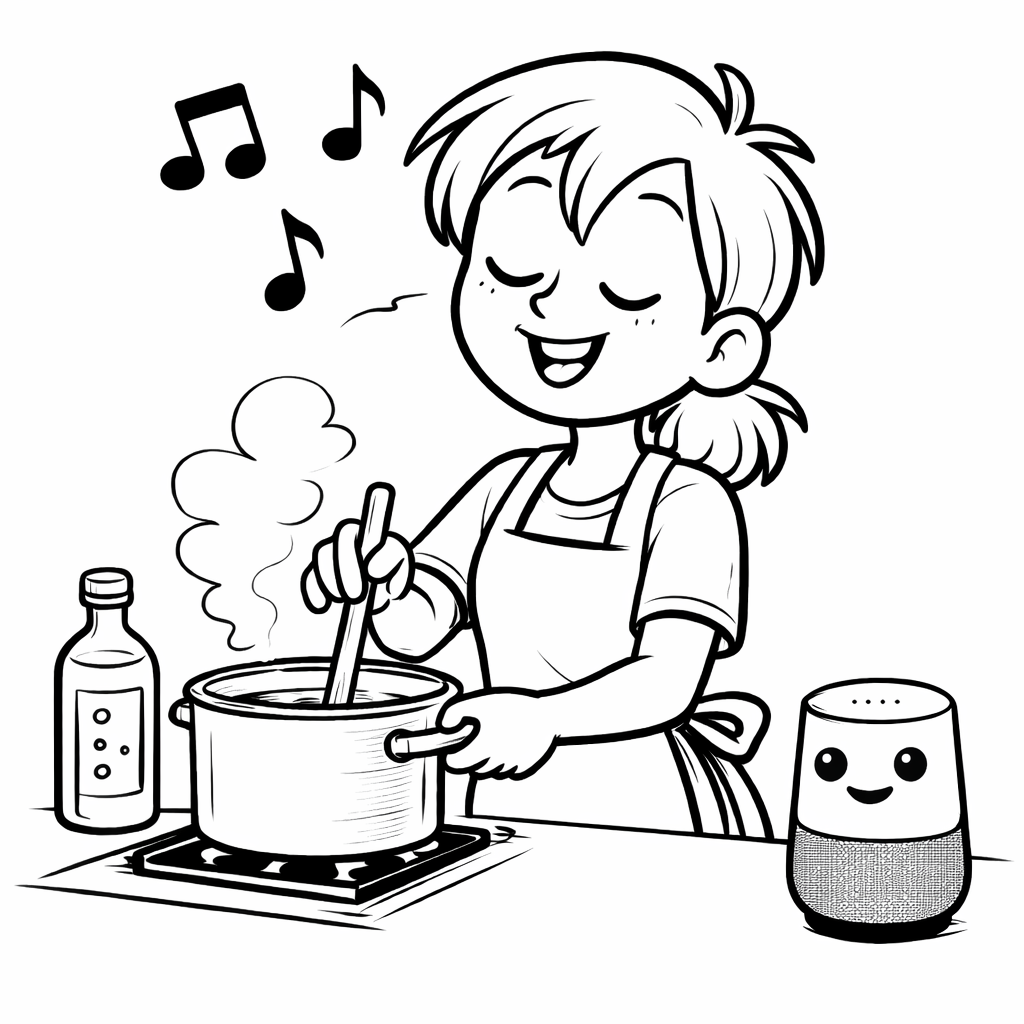
On the other end, you have the pure spark-originator: imagine someone who’s cooking dinner and suddenly hums a great tune. They didn’t set a timer, lock themselves in a room, or do a four-hour “deep work block.” The tune just arrived. Then they sing it to a producer or arranger, and that other person turns it into a polished recording. It could even become a hit. If that’s possible (and it obviously is), then “deep work is necessary for productivity” can’t be right as a universal rule. Deep work might be helpful for the producer, but the tune-generator can be valuable without it.
This isn’t some exotic edge case. Most creative people recognize the pattern: you grind on a problem and get nowhere, and then later you’re half-watching TV, and something clicks in a split second. Suddenly, the solution is obvious. That doesn’t mean the earlier work was useless, and it doesn’t mean the TV show “caused” the idea in a neat, linear way. It just shows that insight often comes from weird angles and timing you can’t schedule. A lot of creativity is incubation plus a trigger, not a straight line of effort.
Now bring Steve Jobs into the picture. He wasn’t an engineer or a day-to-day designer in the narrow sense, and he didn’t need to sit in front of a computer writing code all day to be effective. His “focus” often looked like simplification: eliminating features that didn’t matter, and, when he returned to Apple, slashing the product line down to a small set that made sense. Those decisions can look like intuition made in seconds. You can’t “reason your way” to the first iPhone like it’s a math proof. Plenty of smart competitors had access to the same broad facts, and they still missed.
But that doesn’t magically make material conditions irrelevant. Jobs engineered conditions in a different way. He used the organization itself as his medium: reviews, prototypes, hard constraints, and relentless selection. And he cared about breadth too. There’s a story about an MIT building that temporarily housed different departments together; the cross-pollination produced a lot of unexpected collaboration and ideas. Jobs understood that kind of effect, which is why he designed Apple’s campus so people would bump into each other, forcing everyone through a central area to create collisions. That’s not Newport-style isolation. It’s almost the opposite: designed serendipity.
This is where the “deep work” label starts to feel misleading. In everyday speech, “deep work” sounds like it covers any form of high-quality thinking. But in Newport’s book, it’s tightly tied to a particular tactic: sustained, interruption-free concentration, often done alone, on cognitively demanding tasks. That tactic can be incredibly powerful for execution. It’s just not the whole story for creativity, and it’s not the only way high-level work happens. Some of the best sparks come from breadth, not depth, by mixing inputs across domains and letting the brain make unexpected connections.
It gets even messier when you try to tie “good judgment” to success. A music producer is basically a professional judge: they choose takes, shape arrangements, decide what’s working, and keep a project coherent. That’s “accountable judgment.” And yet no amount of judgment guarantees a hit. Music, art, books, and films live in a noisy world. Timing, distribution, luck, culture, and weird network effects matter. Sometimes what goes viral is exactly what no one intended. Even when something you intended succeeds, it doesn’t prove your intention caused the success. That story can be an attribution error.
In fact, trying too hard to “raise the probability of good outcomes” is one of the ways art gets ruined. If you interpret judgment as risk avoidance (committee notes, consensus safety, smoothing out anything sharp), you compress the very variance that makes art interesting. This is why it’s naive to say “just remove avoidable failures.” Often, you don’t know which “failure” is secretly the point until after the fact. John Cage removed conventional intention and allowed chance operations to determine the outcome. Roland Barthes’s “death of the author” makes a related point on the meaning side: the author’s intention doesn’t get the final vote on what a work is. The audience and context do. In that world, “quality control” is not a simple good. It’s a tradeoff that can sterilize the work.
So where does that leave Deep Work? It is an execution tool. It helps you do demanding tasks better and faster, and it helps you ship coherent things when you personally own the finishing. It does not guarantee that you’ll have the spark, and it does not guarantee market success. At best, it changes the odds over many attempts, and even that depends on whether your “focus” is being used to protect something alive or to optimize the life out of it.
Now add AI, and the spectrum becomes even more important. If you look at the ends again, the programmer who is told exactly what to write is the kind of role AI is quickly learning to replace, because “execute explicit instructions” is exactly what machines are good at. Meanwhile, the spark-originator end (coming up with a compelling direction, a hook, a framing, a taste-driven constraint) looks more like the scarce human advantage. As AI evolves, especially as it becomes more agentic, it’s reasonable to expect humans to get pushed toward that end. More people will be delegating execution, refinement, and even a lot of testing and iteration to systems that can do it cheaply.
But even if AI becomes incredibly capable, as long as it’s functioning as your agent, there’s still a non-delegable remainder. You can delegate research, drafting, prototypes, market tests, and recommendations. What you can’t truly delegate, without giving up ownership of the outcome, is the part where you set the goal and the boundaries: what you actually want, what tradeoffs you accept, what you refuse, and what you’re willing to be responsible for. That’s values, risk tolerance, and endorsement: the final “yes, ship it,” along with the consequences of being wrong.
And if that’s the direction we’re heading, it’s perfectly reasonable to say that “deep work” is not necessary. It can still be useful, and sometimes extremely useful, but it’s not the definition of productivity. At the extreme, a person can contribute a spark, hand it off, and still create something that matters. Meanwhile, creativity itself may benefit more from breadth than depth: more collisions, more diverse inputs, more chances for odd connections to happen. Newport’s advice might remain a great playbook for executors, and for anyone who owns the finishing. But if AI keeps eating execution, humans may win more often by becoming better curators of taste, better choosers of bets, and better designers of serendipity than by simply adding more hours of uninterrupted concentration.
Subscribe
I will email you when I post a new article.